
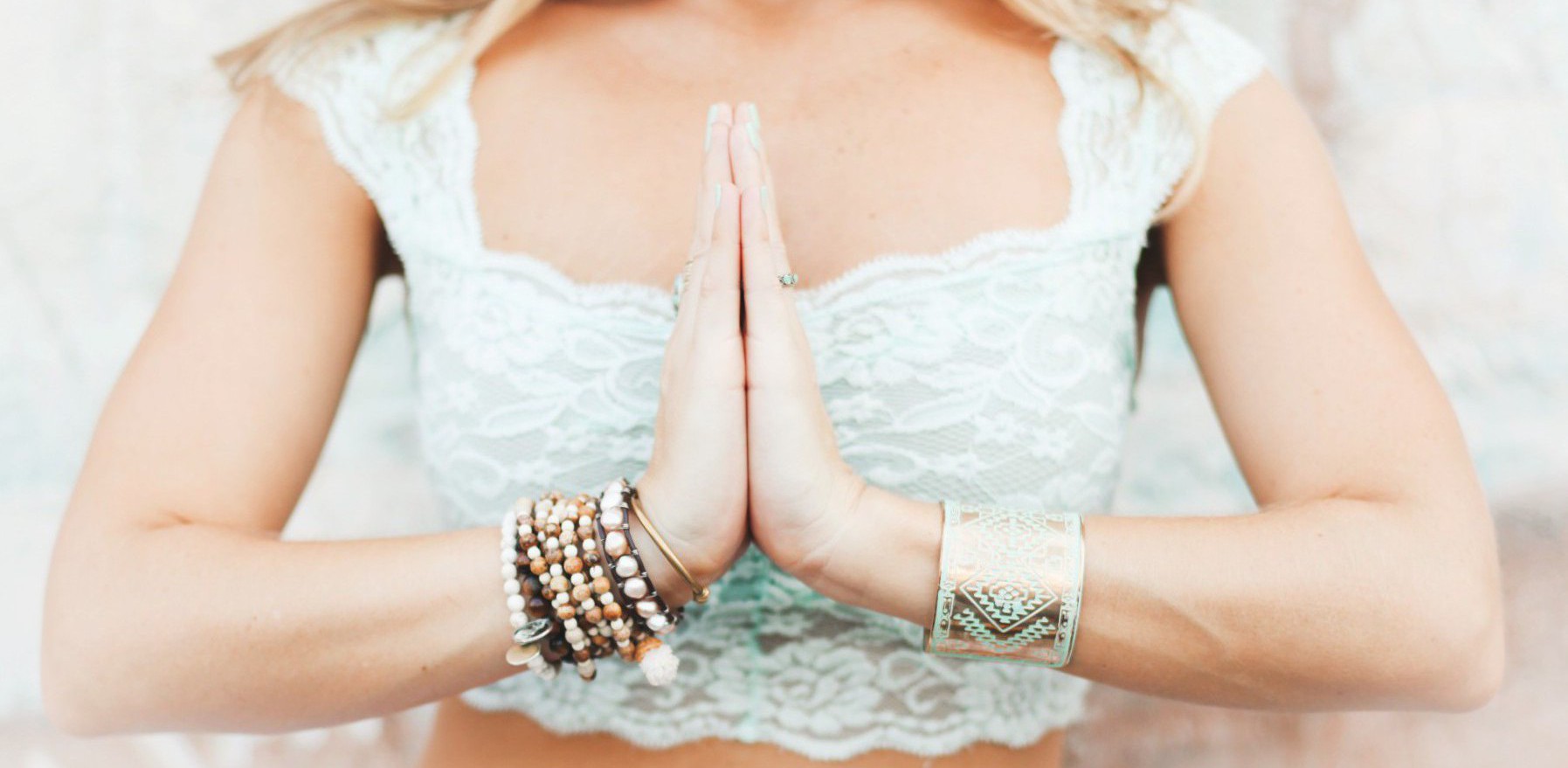
If you’ve ever wondered about the beautiful, beaded necklaces often seen in yoga spaces, you’re noticing mala beads — a sacred strand of intentionally chosen and purposefully strung beads.
Mala beads originated in India over 3,000 years ago and hold deep connections to Hinduism, Buddhism, and yoga philosophy. The Sanskrit word mala translates to “meditation garland,” and these beads have long been used as an aid for diving deeper into meditation.
What Are Mala Beads?
A traditional mala consists of 108 beads, often made from rudraksha seeds, sandalwood, or rosewood. At the center is the 109th bead, often called the guru bead, which may be made of a healing crystal. This bead symbolizes the connection to the divine or to your highest self. It serves as both the place where meditation begins and the point where it ends.
Mala beads are deeply rooted in ancient South Asian spiritual traditions, where they have been used for centuries in practices such as japa, the repetition of a mantra. When we use mala beads today, we honor and participate in a practice that has supported meditation and mindfulness for thousands of years.
The Significance of 108
The number 108 holds special meaning across many yogic and spiritual traditions. Some believe it reflects the 108 energy lines (nadis) that converge at the heart chakra. Others point to the 108 Upanishads, or to the number’s recurring symbolism in mathematics, astronomy, and philosophy. Whatever interpretation resonates with you, 108 is widely considered a sacred and complete number.
How to Use Mala Beads in Meditation
Mala beads are traditionally linked with a mantra or intention chosen by the user. Here’s how to practice with them:
- Find a comfortable seated position and allow your gaze to soften or your eyes to close.
- Bring awareness to your breath for a few moments.
- Hold the mala in your right hand. Gently place the bead between your thumb and middle finger, keeping the index finger straightened.
- Recite your intention or mantra aloud or silently.
- Use your thumb to move to the next bead, repeating your mantra with each bead.
- Continue around the full strand of 108 beads. When you reach the guru bead, pause, offer gratitude, or reflect.
This tactile practice supports focus and can help cultivate a deeper, more grounded meditation experience.
Choosing Your Mala
When selecting mala beads, trust your intuition. If a certain strand catches your attention or feels meaningful, it is likely the right mala for you at this moment. Consider the material as well:
- Rudraksha seeds for grounding and protection
- Sandalwood for calm, focus, and clarity
- Rosewood for compassion and healing
- Gemstones for energetic support aligned with your intention
You can wear your mala around your neck or wrist, display it in your home or car, or bring it to your mat as a reminder that your breath, intention, and inner wisdom are always available.
Caring for Your Mala
Many practitioners choose to “cleanse” or recharge their mala beads from time to time. This can be as simple as holding the beads in meditation and reaffirming your intention, or placing them in moonlight, sunlight, or near incense. What matters most is the mindfulness you bring to the process.
Bringing Mala Practice Into Daily Life
Whether meditation is already part of your routine or you’re just beginning, the simple act of sitting, breathing, and intentionally focusing on your mantra can be profoundly supportive for the mind, body, and soul. A mala offers a tangible way to stay connected to your practice throughout the day.
Using mala beads is an invitation to pause, breathe, and reconnect — to yourself, your intention, and a practice that has supported seekers for thousands of years.